

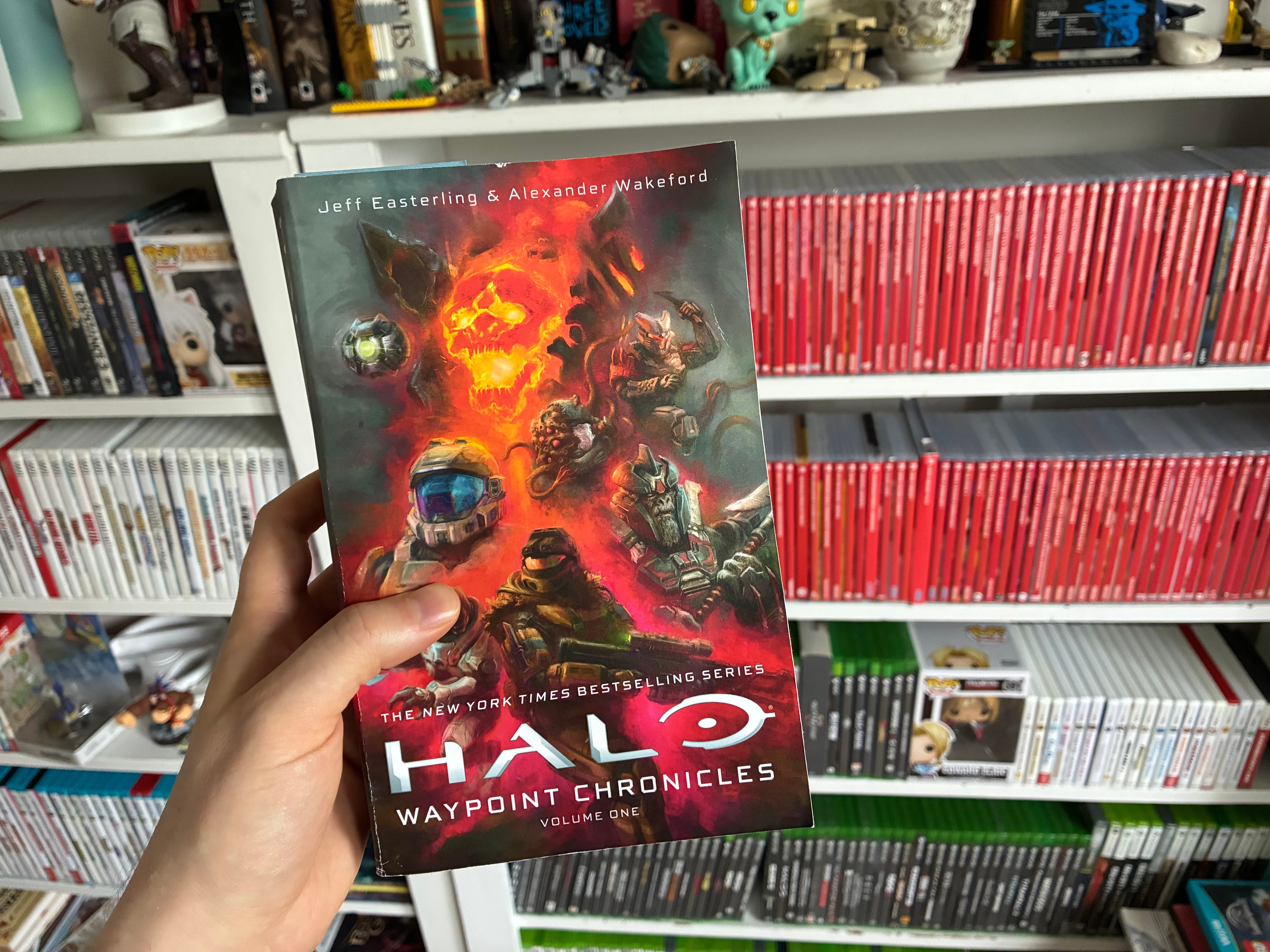
Nothing makes me happier than a new HALO novel or book hitting the market. I look forward to diving back into the lore, stories, and characters from a series I have grown up with. As a man closing in on 40, I can say that new books in the series excite me more than the prospect of a new game. I love spending time with characters outside the main lens of the games. In a sense, I approach HALO the same way I approach STAR WARS where I look to books to continue my passion for the series.
HALO WAYPOINT CHRONICLES is a different book compared to the usual offerings such as EDGE OF DAWN or EPITAPH. This isn’t a straightforward narrative - it is a collection of stories and snippets taken from HALO WAYPOINT. If you don’t know what HALO WAYPOINT is, it’s the official website for all things HALO and its vast lore. What I didn’t know before getting this book, it that there have been short stories written on WAYPOINT for years that I was unaware of.
Jumping between The Spirit of Fire or the events with Cortana on Zeta Halo, the book covers lots of territory specifically for those who have been playing the games and reading the books for years. This is not what I would consider an ease of access point for casual fans because there were even a couple of instances I had to refresh myself on a topic.
Coming in close to 600 pages, this is a substantial piece of work put together by Easterling and Wakeford. Years of stories edited together in a cohesive way along with new content specifically for this release.
Gallery Books over at Simon and Schuster was kind enough to not only send me a copy to read/review but also put me in touch with the editors/writers of HALO: WAYPOINT CHRONICLES VOL. 1.
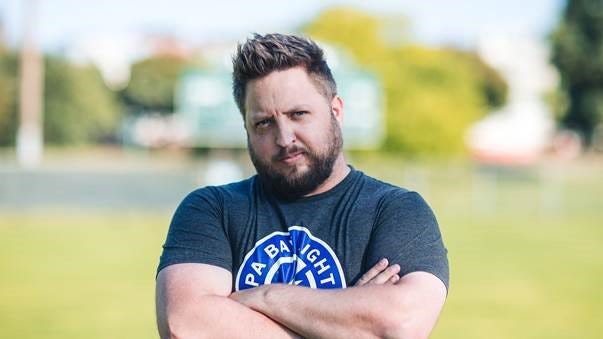
Jeff Easterling is the senior franchise story lead at Halo Studios, helping guide the brand’s narrative and storytelling efforts across games, novels, extended media, reference guides, and more. An author on Halo Mythos and the Halo Encyclopedia, Jeff has contributed to the creation and curation of Halo’s vast and ever-expanding lore and universe for over a decade.
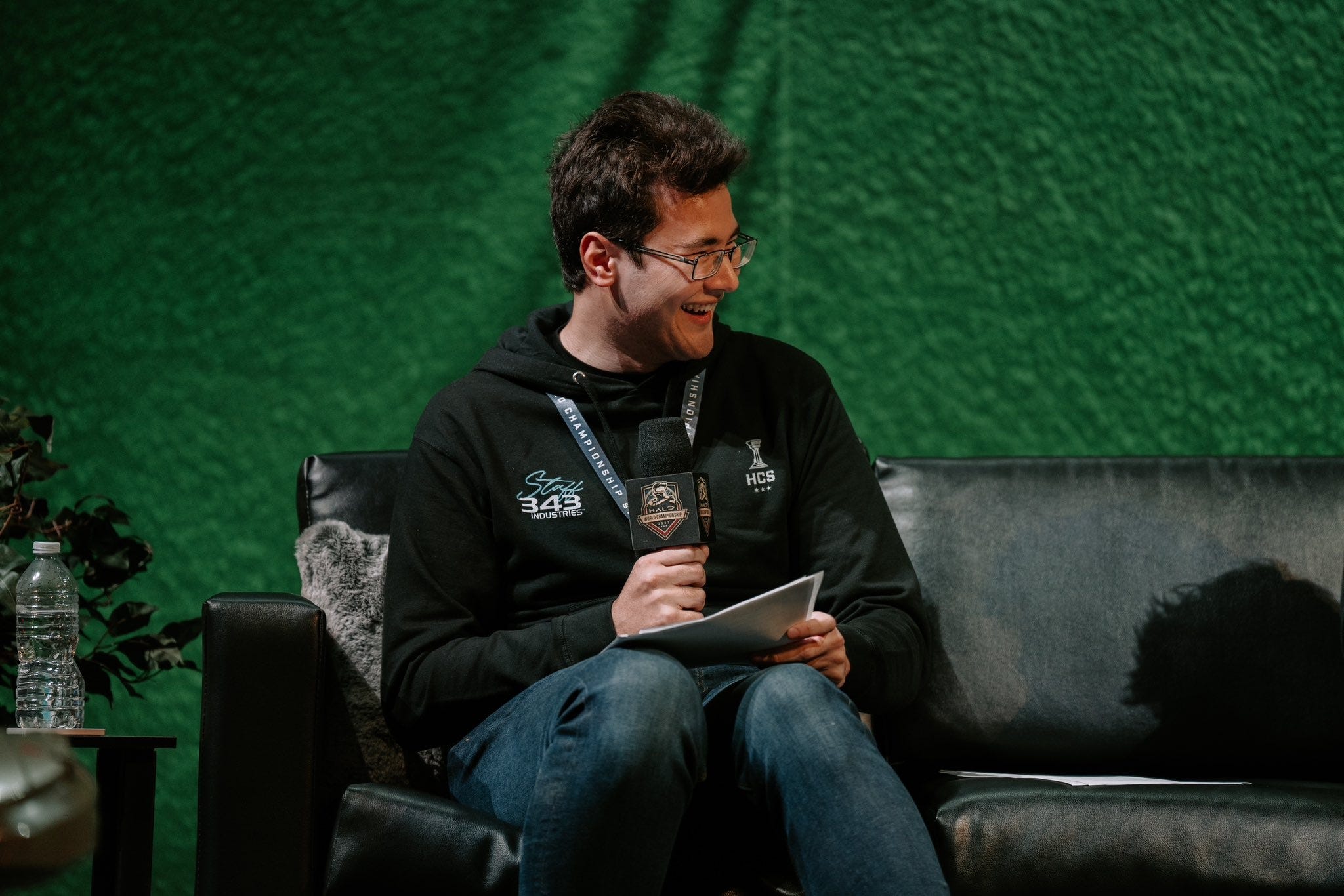
Alex Wakeford a franchise writer for Halo Studios. Since 2021, Alex has been directly involved in both writing and editorial efforts throughout Halo’s extended fiction and multimedia storytelling, spanning games, novels, online media, and more.
Enjoy my interview with these two creatives!
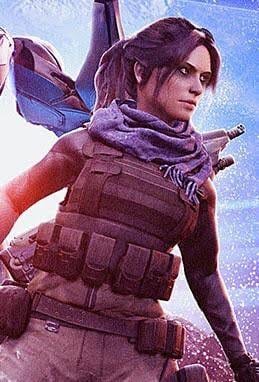
Jesse: I would like to start with an icebreaker question for y’all - who is your favorite or a couple of your favorite character(s) from the HALO canon? Outside of the obvious answers for myself, I love the Arbiter (Thel ‘Vadam) and Atriox. They both have deeply developed arcs. I would also add Dr. Halsey as I find her complicated and not just “evil doctor lady.”
Jeff Easterling: First off, thanks for having us; it’s been a few months now since the book released but we had this little game thing also come out in between then and now, so we appreciate your patience!
Your first question is both great one and a terrible one—there’s way too many to choose from! I’m going to go with both a more “mainstream” one as well as something way more niche, and because they’re my favorite part of Halo, I’ll make them both aliens lol.
It’s cliché, but I don’t care: the Arbiter is an all-timer. Halo 2 is still my personal favorite of the series, and Keith David could read a cook book and still topple an empire. And for a lesser-known pick, I’ll say Stolt. Who is Stolt, you ask? I’ll give you three words: Giant. Warrior. Grunt.
If I have to pick a human, it’s currently a tossup between Rion Forge and Thomas Lasky.
Alexander Wakeford: It’s the wonderfully layered and complicated characters who have transitioned across the gradients of heroism and villainy. The Arbiter, Dr. Catherine Halsey, 343 Guilty Spark, and the Didact in particular are in my pantheon of favorites—it comes as no surprise really that three out of those four are in this book!
Jesse: I’ll be honest, even though I have been reading HALO novels since Nylund’s 2001 book THE FALL OF REACH, I have been unaware of the fiction that has been added over the years to Halo Waypoint. I think this ignorance stems from my lack of engagement with the site which this compilation novel makes me want to reassess. My question here is, how did y’all transition from fans to writers and did you ever think you would be in the narrative hotseat for one of the largest video games properties?
JE: A lot to unpack there! First off, yes, you should definitely reassess your engagement with all the cool content on Halo Waypoint. From a lore standpoint you have core fiction elements like the Waypoint Chronicles, as well as more analysis and recap features like our regular Canon Fodder blog. But it’s also rich with amazing things that our stalwart Community Team collects and curates, from news and events to mind-boggling epic fan creations. This is obviously a completely objective and unbiased opinion.
And honestly, it’s a bit of a good segue into the latter part of your question; I spent thirteen years being a massive fan of Halo, specifically of its lore and universe, and it’s wild now to think that I’ve now spent almost more time on this side of the proverbial fence. My coming on to the franchise was a combination not just of the passion and knowledge of the franchise itself of course, but also of the craft of storytelling, which I had been honing for two decades before that in other capacities.
And even after twelve years, it’s exciting and humbling every single day to get to contribute to any sort of way to something that means so much to so many. We’re always championing the perspective of the lore-loving fan and always trying to find ways to expand the universe in a satisfying way.
AW: I was seven years old when the original game released. There are a lot of things you are meant to “grow out of” as you get older, and there are many things that have been left behind, but throughout my life Halo has remained a constant. Playing every game (multiple times), reading every book (multiple times), keeping up with the series as a fan never left me.
It just has this compelling mix of existing excellence and future potential. To be a small part of that among so many amazingly talented and driven creatives is genuinely incredible.
Jesse: Like I stated, these stories were all new to me which was exciting because it was like unearthing new lore. I assume there will be many readers similar to me who will get to experience these stories for the first time. In a way, I felt like I was reading the HALO version of FIRE & BLOOD in which I was given added lore to fill in the canon a bit more. When you wrote many of these stories for Waypoint, did you ever think that they would make their way into a published volume for the trade retail market? My second part of the question is, when you did begin to pull this altogether, were y’all taken aback by how much content you had produced over the years?
AW: To the first part of your question, we certainly hoped so! We began this journey in November 2022 with Vertical Umbrage, a short story that was released to celebrate the tenth anniversary of Halo 4 and followed a team of Spartans who appear both in that game and in Halo Infinite’s audio logs.
A few months later we told a Noble Team story which focused on Rosenda and Thom, two characters that were cut from Halo: Reach but have existed in our canon as former members of the squad—that story actually created the free Noble Intentions pass in Halo Infinite where players could acquire the armor of those Spartans. And we just kept going from there.
As we released more of these stories, we were getting data back that showed very clearly that these were being positively received by the community so we just kept going. I don’t recall exactly when we decided that these would be compiled into a print anthology but it was always the hope that we’d be able to do enough to justify that. To your second question, as that collection really came together, we were indeed very much taken aback that it amounted to what it did!
JE: Yeah, we knew it was a solid amount, but when we actually started adding it all up it was one of those “oh…” moments. The real reality set in when our executive editor at Simon & Schuster/Gallery Books, Ed Schlesinger said to us, “Guys, do you realize you’re at around six hundred pages?”
We weren’t quite sure if we should celebrate or apologize. I’m pretty sure in the end we did both. And yeah, while the print anthology was certainly predicated on having enough material to work with collectively, it was more so the passion and response showed by the Halo community coupled with the excitement and interest shown by our publishing partners. In the end it all worked out to form something pretty cool, and we’re excited to build on that momentum in the future.
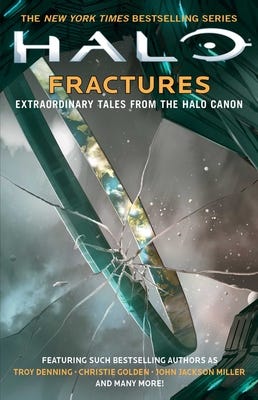
Jesse: I think that HALO works well in a flash fiction or short fiction format. One of my favorite books is HALO FRACTURES as it truly was an example at the time how rich the lore had become in 15 years. WAYPOINT CHRONICLES tapped into that same part of my brain where I was jumping around different years but somehow keeping track because of how long I have been in this “world” and its characters. Do y’all also enjoy the short nature of fiction writing because you can dive in and out?
JE: I know that when I was a fan, some of the most interesting threads were found tucked in the descriptive text of some armor, or sprinkled throughout an art book or game manual. It was those little glimpses of the wider universe that provided the real seasoning to the game’s main course story.
It made you feel like the Halo universe was lived in, like its history mattered to the characters and factions that you saw pop off the screen and page. One of my favorite things about the Volume One collection of Waypoint Chronicles is not just collecting the short stories themselves, but the other ancillary drops of intel and micro lore that fill in those even smaller spaces in between.
AW: Halo is such a vast universe, you really can dip in and out of just about any part of it and tell a cool, unique, and meaningful story. What does a day in the life of the UNSC Spirit of Fire crew look like while they’re trapped on the Ark outside the galaxy? What do things look like when viewed through the eyes of a Promethean Knight as the human “soul” trapped within this war machine is gaining awareness of what it has become? What kind of things are humans aspiring toward now that they know they’re part of a larger galaxy and are not just fighting aliens but also allied with them?
There are an endless number of fascinating questions that the games don’t necessarily have the space to really delve into, or wouldn’t necessarily fill a whole book, but they’re worthy subjects to explore that—we hope—enrich the grand tapestry of the Halo universe.
JE: Yeah, a lot of times it’s those dangling threads that really make you wonder, like an unresolved note that becomes an obsession to seek out. It’s the “wait, what did that say?” and “does that mean what I think it means?”
AW: Exactly. For example, there’s a single throwaway line in Halo 4’s Spartan Ops mode about “Covenant asylum seekers” living on Earth in Rio de Janeiro. That’s never actually been explored despite being so rich in its implications. In this book, we finally got to go there in Rendezvous with Ramen and see what it’s all about. It’s told through the lens of an Anthony Bourdain-inspired food critic trying out alien cuisines while learning about what life looks like for the Sangheili who were stranded on our homeworld at the end of the Covenant War and had to make a life for themselves. It’s been wonderful to see such a positive reaction to that story in particular because it’s one of those many things fans have always wanted to learn more about.
Jesse: I would like to ask more of the logistical side of all this. The book is organized and segmented out with brief context drops before each vignette. I assume this wasn’t just organized by when you published on Waypoint (like chronologically by date) so I was curious how you edited this large amount of content into its cohesive structure.
JE: Yeah the organization is definitely very deliberate. While the stories themselves over the past few years have focused on a variety of different content releases and franchise milestones, we really wanted to weave a common thread of connectivity through the whole collection as much as we could. That thread was each story’s connection to the larger themes and events explored in Halo Infinite.
As mentioned a bit earlier, there were lots of small bits of fiction we had released to complement the game’s narrative beats—from clandestine intel on events and findings to micro-stories about characters and special weapons. These elements are gathered from a variety of sources, from in-game menus to regular blog features, something Alex is definitely intimately familiar with!
AW: Absolutely. We explored a lot of different ways to structure this book and that certainly was a creative challenge. The overall skeleton is in release order for the Waypoint Chronicles, but interspersed within the larger stories are the much shorter Intel drops and Armory Infinitum pieces, selected specifically to match the themes and context of those stories.
For example, all the narrative elements pertaining to the Battle for the Academy are grouped together so you experience that chunk of the story as a singular whole.
Part of it is also a pacing thing. When you read an anthology it can be daunting to go from one lengthy story to another, so having a bit of a break helps to add a bit of variety to that rhythm.
Jesse: My favorite story in the bunch is “Battle for the Blood Moon.” I wanted to ask if there were any stories you would consider your favorites for either its content or if any mean something more to you.
JE: First off, I love that you love Battle for the Blood Moon, as it’s actually a really great example of how so many things can work together to tell a story from myriad angles. When the multiplayer map “Prism” was in development, we worked hand in hand with the design and art teams as the map was taking shape. When we eventually landed on the theme of basing the setting around a site mining the crystals used in Needler weapons, we started crafting a narrative that we wanted to come through really clearly in the skybox of that map: the civil war in the skies of Suban, one of the moons of the Sangheili homeworld. It was a way that even without any sort of “cutscene” or “mission,” you could just look around at the clues around you and get a feel for what was happening.
But of course, that wasn’t enough for us!
AW: It never is…
JE: Nope. Anyway, we also of course, wanted to craft a deeper narrative to pair with the map—a story that when people read it, they could look around at the play space and imagine it taking place. It’s also a story that really exemplifies how a lot of our story development worked with the Chronicles. With some stories, like Battle for the Blood Moon, we’re working on an outline and literally dividing the story up between us, typically by perspective. So for example with that story, Alex spearheaded the ship-to-ship communications, and I handled the character interactions planetside (moonside?)
With other stories, it might be one or the other of us really driving the main creative and then the other is providing edits, additions, and a creative counterpart to raise questions and hone the final product. On those, if I have to pick a couple of favorites…
Alex came up with the premise for Axios and I just love it. Like I mentioned before, Lasky is a character I adore and I’m also always a sucker for strong sibling bonds. Plus, listening to the marvelous Darren O’Hare (Captain Lasky’s game voice talent) read the audiobook version is the perfect finish.
AW: Lasky has the perpetual look of a sad puppy, one who is silently tortured by his sense of duty and the weight of living up to the image he has of an older brother who died at the age of eighteen. There’s so, so much to mine from such rich character material there!
JE: I also have a particular soft spot for Bella Corsa, which is a bit of a love letter to endurance racing, a sport I’m incredibly passionate about. And it’s narrated by Lottie Van-Praag, a dear friend and colleague who has been the “voice” of Halo esports for many years.
AW: I’ll start with my favorite story that Jeff did, which is Aileron. We went through a few different versions of what that story could be over a couple of years and just never found a place for it, so when we decided to do additional stories exclusive to the book that was where this one really clicked. Jeff had volunteered to take this one and I remember him calling me when he finished the draft, reading it aloud together (a regular fixture of our creative process), and I just loved its mix of high-stakes dogfighting action, pilot banter, the epic backdrop of a shattered moon, and a rather unique utilization of humanity’s status as Reclaimers of Forerunner technology.
For my own, Ghosts of the Gyre is very much the one I look back on with a lot of pride and love. It’s a bit of a love letter to the late Greg Bear’s incredible Forerunner Saga, dealing with the mysteries and cosmic horrors of Zeta Halo pertaining to humanity’s ancient, long forgotten past. It also definitely has shades of Jeff VanderMeer’s Annihilation, and the way I like to engage with this aspect of the Halo universe is greatly inspired by David Lynch—something that is evidenced perhaps most strongly in Tulpamancy.
Jesse: With the remake of HALO released last month (good lord it’s been 25 years), do you see this as an opportunity to not only promote this existing lore but previous novels as well to those who, believe it or not, will be playing HALO for the first time? Maybe on their PlayStation?
JE: Just hearing you say “twenty-five years” made me age faster.
AW: That was happening anyway.
JE: See what I have to put up with? Creative collaboration… both blessing and curse!
AW: It’s also a blessing and curse (but mostly a blessing) that there’s just so much fiction in Halo. That can be daunting for a newcomer to approach, so whenever we’re asked what novel they should start with we typically default to The Fall of Reach because that really is just the strongest foundation for understanding the “ground floor” of Halo.
JE: It’s of course—like you mentioned—also perfect to celebrate right now because it’s not just the silver anniversary of the original game, but also for that first novel, which really laid so much foundational fiction for the universe that would impact it for the decades to come.
AW: To that point, we actually have that book—along with The Flood (the novel adaptation of Halo: CE), and First Strike (which bridges into Halo 2)—coming in a singular volume later this year in the form of Halo: The Master Chief Omnibus.
Those books, really, are such a fantastic gateway into the universe because that’s what they were for us over two decades ago in concert with Halo: CE. I would posit that that’s your most ideal route in, but as with any franchise it really could be any fiction you’re exposed to that ends up being the thing you didn’t know would hook you in—Waypoint Chroniclesincluded.
JE: Agreed, and the Chronicles themselves cover so many elements of the Halo universe that we hope that even newcomers will find stories that interest them and encourage them to dive deeper.
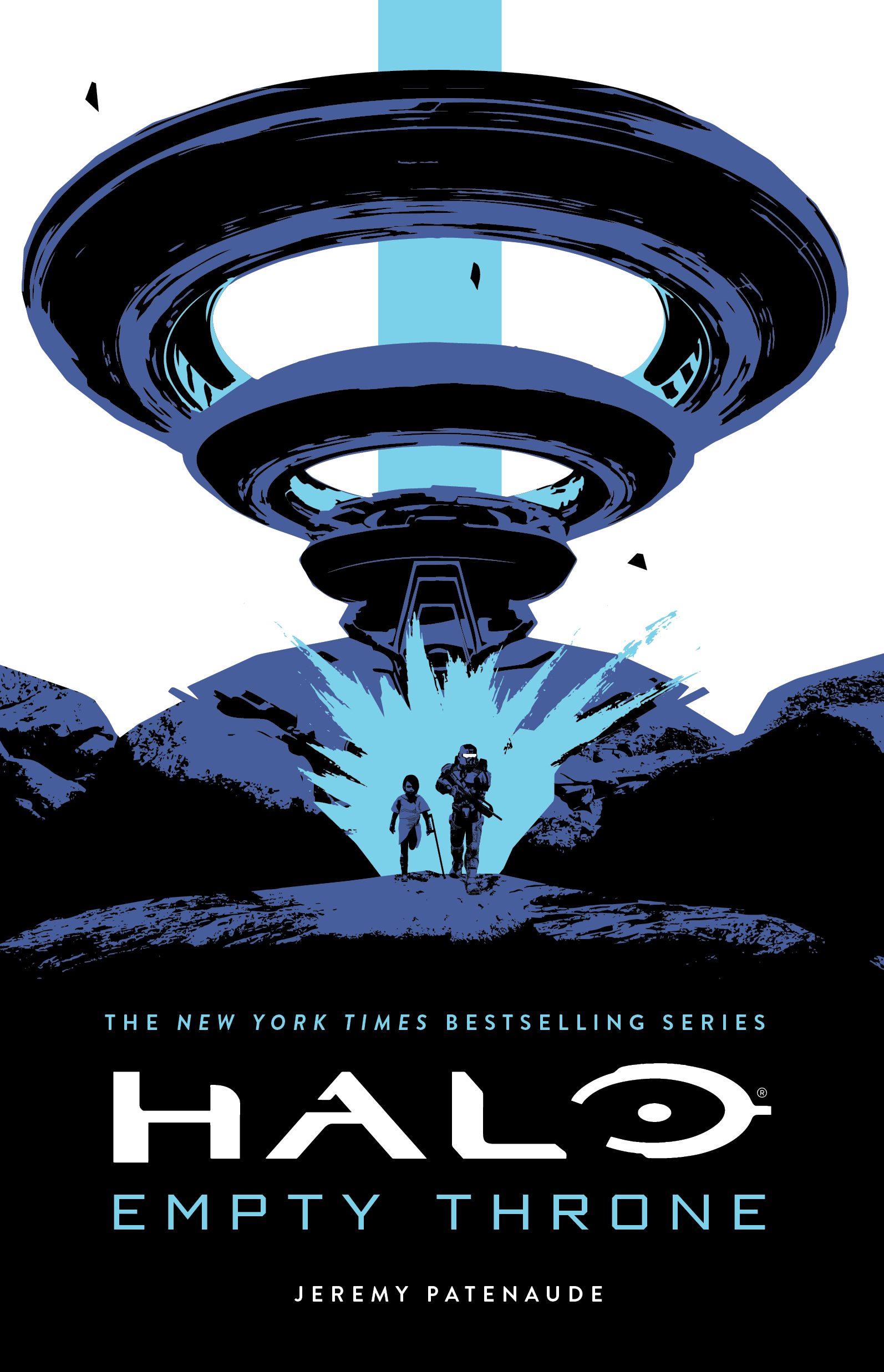
Jesse: With Jeremy Patenaude stepping down in 2023, y’all have taken on more duties and responsibilities with the IP. I was wondering if you could comment on the direction and the future of the series in its many forms (games and books). I know this will elicit a general response as you can’t say too much but any and all comments are welcome!
JE: So, while Jeremy stepped away from the studio itself a few years ago, he remains a close friend and creative contributor—in fact his first full length Halo novel released just last year (Halo: Empty Throne)! Honestly, his impact on the franchise will continue to be felt for many years to come, which I love. And we of course continue to work alongside countless creative colleagues who are ridiculously talented across so many disciplines—it’s just as exciting and humbling to come to work every day as it’s ever been.
As far as “future” direction, we’re indeed going to give you the non-answer you completely (and accurately) expect! However, we will say that we’re both very excited about it. You know, “Just getting started,” and all.
If you want to purchase the book, you can do so over at BOOKSHOP or Amazon.